Revolutionizing Manufacturing Operations: The Impact of AI
In the rapidly evolving landscape of modern manufacturing, Artificial Intelligence (AI) has emerged as a transformative force, reshaping operational processes and optimizing efficiency. This article explores four key AI use cases within manufacturing operations: Predictive Maintenance, Inventory Management, Production Planning, and Procurement. Each use case plays a pivotal role in enhancing productivity, minimizing downtime, and fostering agility across the manufacturing ecosystem.
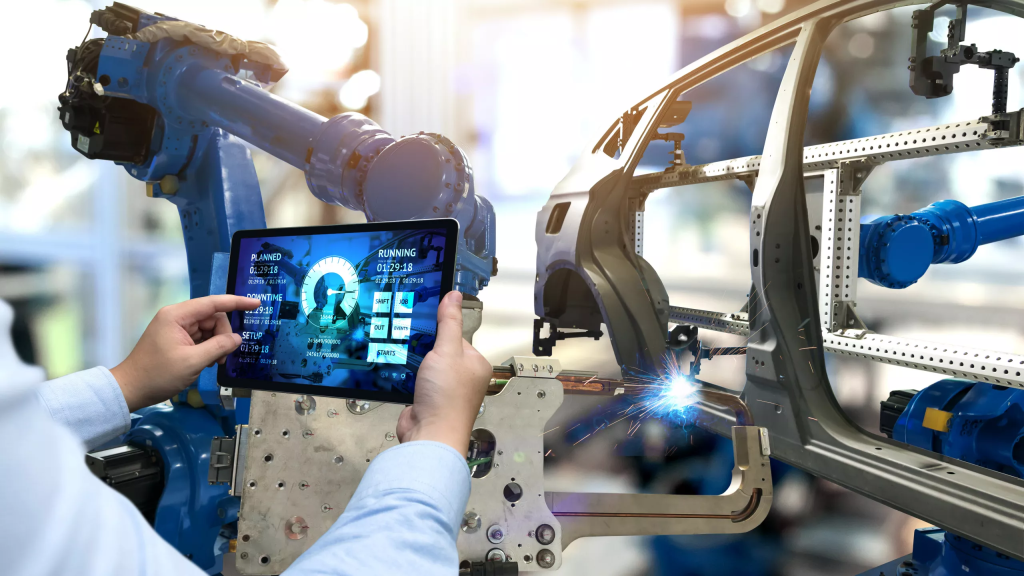
The Rise of AI in Manufacturing
Predictive Maintenance
Traditional Challenges
Maintenance in manufacturing has historically been a reactive process, leading to unscheduled downtime and increased operational costs.
AI’s Predictive Power
AI in predictive maintenance leverages machine learning algorithms to analyze historical and real-time data from machinery. This allows for the prediction of potential equipment failures before they occur, minimizing downtime, reducing maintenance costs, and extending the lifespan of machinery.
Inventory Management
Inventory Challenges in Manufacturing
Balancing inventory levels to meet demand while avoiding overstocking or stockouts is a perpetual challenge in manufacturing.
AI-Driven Inventory Optimization
AI in inventory management transforms it by analyzing vast datasets to predict demand, optimize stock levels, and streamline supply chain processes. This results in cost savings, improved order fulfillment, and increased customer satisfaction.
Production Planning
Traditional Production Planning Limitations
Static models and manual inputs often lead to suboptimal production schedules that struggle to adapt to changes in demand and resource availability.
AI-Enhanced Production Planning
AI in production planning introduces dynamic, data-driven models that adapt to real-time changes. By analyzing historical production data, market trends, and external factors, AI optimizes production schedules, increasing efficiency, reducing lead times, and allowing quick responses to market demands.
Procurement
Procurement Challenges in Manufacturing
Inefficient procurement processes, delayed supplier responses, and limited supply chain visibility contribute to increased costs and operational bottlenecks.
AI-Driven Procurement Transformation
AI in procurement automates routine tasks, enhances supplier selection, and improves negotiation strategies. Natural Language Processing (NLP) enables AI systems to analyze contracts and supplier communications, ensuring better decision-making, cost savings, and an efficient procurement process.
Achieving Synergy Across AI Use Cases
Creating a Unified Manufacturing Ecosystem
The integration of these AI use cases creates a powerful synergy within manufacturing operations. For instance, insights from predictive maintenance can inform production planning, ensuring equipment availability aligns with production schedules. Similarly, optimized inventory levels contribute to efficient procurement strategies, creating a seamless, interconnected manufacturing ecosystem.
The Future of AI in Manufacturing
As AI technologies continue to evolve, the symbiotic relationship between these use cases promises to redefine manufacturing practices. The era of AI in manufacturing is not just a technological advancement; it is a strategic imperative for those seeking to stay ahead in a rapidly changing industrial landscape. Manufacturers embracing the potential of AI are not merely adopting tools; they are unlocking unprecedented levels of efficiency, adaptability, and operational excellence in the manufacturing journey.
 Tech Diving Blog
Leave a comment